
This article is part of the RuralRISE Farming & Technology Series Dirt to Data, a multi-part examination of how connectivity, data, and emerging technologies are reshaping agriculture and rural economies.
Precision agriculture is just one piece of a much larger story — one about what becomes possible when the right tools meet a reliable connection. From advanced farm equipment to soil sensors, the technology exists. What determines whether it reaches a farm is connectivity.
$47 billion.
That’s the annual economic value the USDA estimates the U.S. economy could unlock if broadband connectivity were fully deployed across agricultural land, when paired with widespread adoption of precision agriculture technologies. Of that figure, more than $18 billion depends entirely on high-speed, reliable internet.
Not someday. Not hypothetically. Today, with tools that already exist.
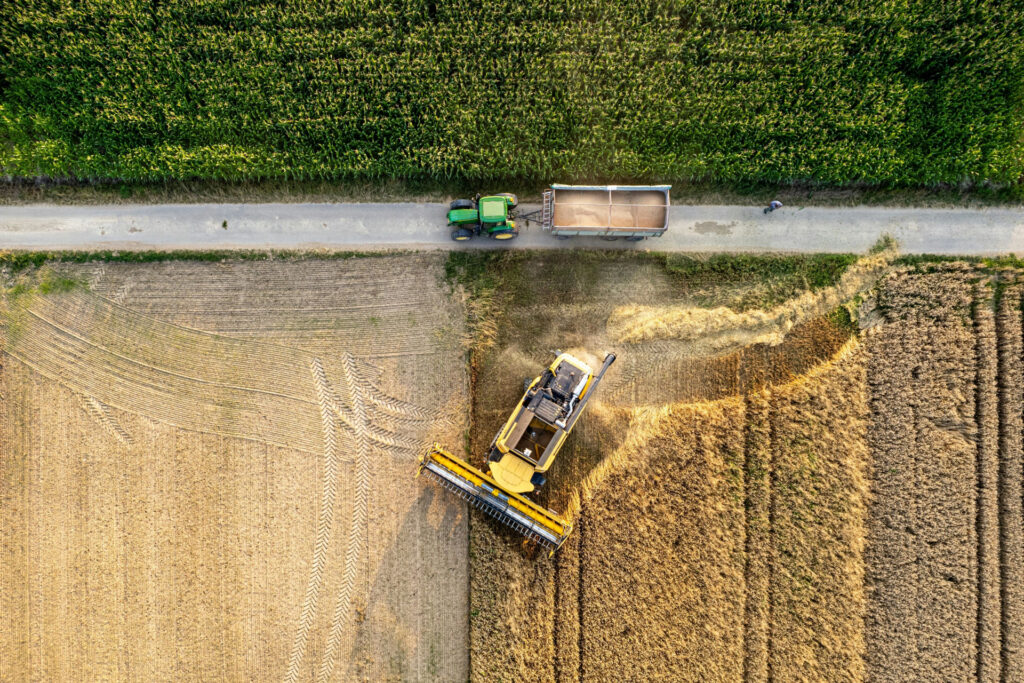
As of 2023, roughly 27 percent of U.S. farms were using at least one advanced precision agriculture practice to manage crops or livestock, according to a U.S. Government Accountability Office (GAO) technology assessment. The technology is here. The economic case is proven. What’s missing, in too many places, is the connection.
What Is Precision Agriculture, Really?
Before we get into the numbers, let’s make sure we’re on the same page about what precision agriculture actually means. The term gets used a lot, and it can sound like something only a massive, high-tech farm could afford. It’s not.
At its core, precision agriculture means using data to make better decisions, field by field, and even row by row. Instead of treating every acre the same, a farmer using these tools knows exactly where fertilizer, water, or nutrients are needed and where they are not.
Here are some of the tools that make this possible:
- GPS Auto-steering: Keeps equipment on precise paths so nothing gets missed or over-applied.
- Soil Sensors and Moisture Monitors: Show exactly what each patch of ground needs.
- Yield Monitors and Field Maps: Show you after harvest which acres did well, and which didn’t.
- Drone and Satellite Images: catch crop stress, pest problems, or water issues early, before they become bigger problems.
- Variable Rate Technology (VRT): Applies the right amount of fertilizer, water, or seed in each part of a field, based on real data.
Many of these tools are getting easier to use and more affordable every year. Together, these tools help farmers make more informed decisions and improve efficiency acre by acre.
The Economics Are No Longer Debatable
For years, the economic case for precision agriculture was studied in projections and estimates. Now, more data is available.
A landmark 2025 study by the Association of Equipment Manufacturers (AEM) (conducted in partnership with the American Farm Bureau Federation, the American Soybean Association, CropLife America, and the National Corn Growers Association) found that precision agriculture has already boosted annual U.S. crop production by 5 percent over the past two decades with the potential for an additional 6 percent gain if adoption rates continue to grow in the years ahead.
Those gains don’t stop at the farm gate. Precision ag tools have also cut water use by 5 percent and reduced fuel consumption by 7 percent, easing the environmental footprint of feeding a growing nation. And for consumers, greater efficiency on the farm means a more resilient food supply and the long-term potential for lower food prices as production costs come down.
So what does this mean at the farm level?
The same study found that every 1,000 acres of row crops farmed with precision agriculture generates $118,000 in annual economic value (approximately $118 per acre) through a combination of yield gains, input savings, and operational efficiency.
To put that in practical terms: a farmer operating 2,000 acres in corn and soybeans could see an estimated $236,000 in annual economic value from precision practices.
That figure reflects the full picture (yield improvements, reduced input waste, and efficiency gains), not a guaranteed addition to the bottom line. But for an operation running on tight margins, even a portion of that value can be the difference on a farm.
The Adoption Gap: Who Gets the Tools, and Who Doesn’t
Here’s the part of this story that most technology coverage skips over, which brings up an important rural challenge: the adoption of precision agriculture is not happening evenly across the United States.
Precision agriculture adoption has grown dramatically over the past two decades. But the farms with the lowest adoption rates across every technology category are small family farms, often the same operations where reliable connectivity is hardest to come by.
According to USDA Economic Research Service data published in December 2024, guidance auto-steering systems are now used on 52 percent of midsize farms and 70 percent of large-scale crop farms. Yield monitors and soil maps are deployed on 68 percent of large operations.
But for small family farms (those with gross cash farm income under $350,000), the numbers tell a different story. Those farms have the lowest adoption rates across every category of precision technology. And that matters enormously, because small farms make up the vast majority of American agriculture by count, even if large operations produce the bulk of output.
Why the gap? Three factors dominate:
1. Capital
The upfront cost of some precision systems remains a barrier for farms that operate on thin margins. Advanced systems like autonomous tractors can cost hundreds of thousands of dollars; far out of reach for most family operations.
2. Connectivity
This is the piece that many conversations miss. Precision agriculture doesn’t work without a reliable connection. Soil sensors need to transmit data. Drones need to upload imagery. Farm management platforms need to sync. Variable rate controllers need to receive prescription maps.
According to the FCC Precision Agriculture Connectivity Task Force, modern precision agriculture increasingly depends on robust, low-latency broadband connectivity across entire farm operations. The Task Force emphasized the need for significantly higher upload and download speeds to support technologies such as autonomous tractors, AI-driven analytics, and real-time field monitoring.
Yet broadband gaps remain substantial in rural America. FCC and USDA data show that many rural households still lack access to reliable high-speed broadband, and USDA survey data found that roughly 15% of U.S. farms reported having no internet access in 2023.
3. Training and Support
Knowing the technology exists and knowing how to use it are two different things. The average U.S. farmer is 58 years old. Many are running operations that were built on decades of hard-won instinct and experience. The technology is evolving faster than the support infrastructure around it. Asking someone to layer AI-driven analytics on top of that without meaningful technical support is a big lift.
Why This Is a Rural Story, Not Just a Farm Story
The precision agriculture gap isn’t just a farm problem — it is a community problem. When farms fall behind, the towns and neighbors around them feel it too.
When a farm becomes more productive and profitable, those gains don’t stay on the farm. They flow back into the community through local spending, job creation, and a stronger tax base that supports schools, healthcare, and infrastructure.
Precision agriculture is also creating jobs that didn’t exist a generation ago, like equipment technicians, data analysts, drone operators, and ag-tech specialists. These are real careers that can keep young people rooted in rural communities, or bring them back home.
But when farms can’t access these tools, the opposite happens. Already-tight margins get even tighter. Farms that could have been profitable with better information simply aren’t.
The Market Is Moving. The Question Is, Who Gets Left Behind?
If you’re a farmer today, you’ve probably noticed the pitch. The equipment dealer is talking about connected sensors. The co-op is pushing data platforms. Your neighbor just bought a drone. The agriculture industry is moving fast — and the tools being built right now have the potential to change what’s possible on every farm in America.
John Deere’s Operations Center alone already manages data from over 400 million acres of connected farmland. Satellite systems, AI-powered scheduling, and automated disease detection are no longer concepts. They’re on the market.
And it’s not just the private sector. The federal government is investing too. The USDA has put more than $500 million toward digital agriculture grants in 2024-2025. The BEAD program represents a $42.5 billion push to expand broadband nationally, including out to the rural communities and farmlands that have gone without reliable internet for too long.
The infrastructure funding is coming. The technology is advancing. The economics are proven.
The question — and this is the question RuralRISE keeps asking — is whether the farms and communities that need these tools most will be part of this transformation or left watching it from the outside.
A Different Way to Think About Connectivity on the Farm
Here’s something that rarely makes it into the technology press releases and industry white papers:
Connectivity on a farm isn’t just about running sophisticated AI systems or uploading terabytes of sensor data. Sometimes, it’s about something far simpler and with impacts that are just as real.
A farmer in a connected area can pull up a weather radar on their phone. They can video-call a vet when a cow is acting strangely. They can watch a YouTube tutorial when an unfamiliar piece of equipment breaks down at 7 PM on a Friday.
These aren’t glamorous stories about precision agriculture. But they’re the ones that keep farms running, prevent losses, and give farmers the same access to knowledge and expertise that urban professionals take for granted.
When a farm doesn’t have connectivity, it’s not just precision agriculture that becomes impossible. It’s all of those small yet critical tasks that become harder to accomplish, too.
What’s Next — and What RuralRISE Is Watching
The next several years will be a critical window.
Federal broadband funding is flowing, but deployment is slow. The FCC’s Precision Agriculture Connectivity Task Force released its most recent report in December 2024, outlining continued gaps between where broadband is mapped and where it actually works well enough to support farm operations.
A new generation of farmers is increasingly demanding these tools — many entering agriculture as a second career, bringing tech literacy and business experience with them. The USDA has allocated more than $500 million in digital agriculture grants in fiscal 2024-2025 to accelerate adoption. The infrastructure investment is real. The technology is advancing. The economics are proven.
What is not yet clear is whether the farms and communities that most need these tools — the smaller operations, the rural areas with patchy connectivity, the producers who can’t afford high upfront costs — will be brought along in time to matter.
That’s the conversation RuralRISE is committed to leading. Not the glossy version of ag-tech that reads like a venture capital pitch deck. The real version, where a reliable internet connection is the difference between a farm that makes it and one that doesn’t. Where a $118-per-acre efficiency gain means a family operation survives another generation. Where precision agriculture isn’t just about optimizing yields, but about protecting the communities that depend on the people who grow our food.
Rural America doesn’t just need to know that precision agriculture exists. It needs the connection to use it.
This article is part of the RuralRISE Farming & Technology Series Dirt to Data:
Part 1: From Dirt to Data: How Connectivity Is Reshaping Farming in Rural America
Part 2: Precision Agriculture: The $18 Billion Opportunity Sitting in a Connectivity Gap
Part 3: AI in Rural Agriculture: What’s Available, What’s Missing, and What It Means
Part 4: Drones and Remote Sensing: A Rural Agriculture Tool With a Connectivity Catch
Part 5: Farm Equipment & Automation — coming soon
Part 6: Workforce & the New Ag Economy — coming soon
Part 7: The Digital Divide in Agriculture — coming soon
Sources
- U.S. Department of Agriculture. A Case for Rural Broadband: Insights on Rural Broadband Infrastructure and Next Generation Precision Agriculture Technologies. April 2019.
- U.S. Government Accountability Office. Precision Agriculture: Benefits and Challenges for Technology Adoption and Use. January 2024.
- USDA Economic Research Service. America’s Farms and Ranches at a Glance. December 2024.
- USDA National Agricultural Statistics Service. Farm Computer Usage and Ownership Report. August 2023.
- Federal Communications Commission. Precision Agriculture Connectivity Task Force Report. November 2023.
- Association of Equipment Manufacturers. The Benefits of Precision Agriculture in the United States. 2025. (Prepared in partnership with the American Farm Bureau Federation, American Soybean Association, CropLife America, and National Corn Growers Association.)
- American Farm Bureau Federation. Unleashing Broadband on Rural America Leads to Nearly $65 Billion in Economic Benefits Annually.
The data and statistics referenced in this article reflect information available at the time of publication. Figures may be updated as new research becomes available; readers are encouraged to consult the original sources directly for the most current information. References to organizations, companies, programs, or products are for informational purposes only and do not constitute an endorsement by RuralRISE.